168 Chairs in the Grass: The Memorial That Taught America How to Grieve in Public
The field of empty chairs on the footprint of the Murrah Building is one of the most powerful places in America — and it sits in the middle of a working downtown, where it was always meant to be met daily, not just on anniversaries.
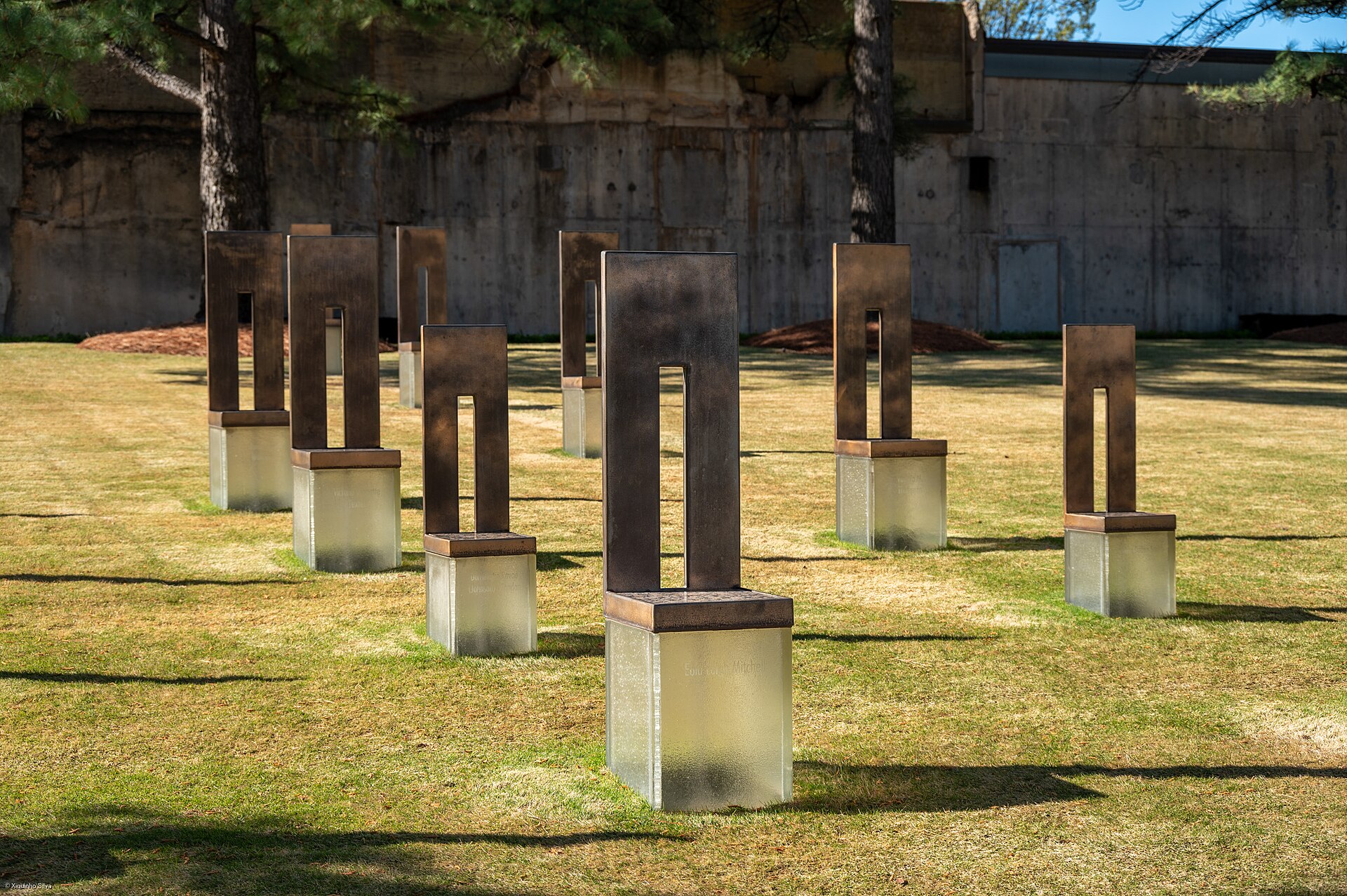
The chairs stop you the way they are meant to. On the grass where the Alfred P. Murrah Federal Building stood, 168 empty chairs — bronze and stone and glass, nine rows for nine floors, nineteen of them small — face the reflecting pool between the Survivor Tree and the Gates of Time: 9:01 on the east gate, the last minute of innocence; 9:03 on the west, the first moment of recovery. Between them lies 9:02, April 19, 1995, the moment a truck bomb murdered 168 people in Oklahoma City and changed the country's understanding of home-grown terror.
The Oklahoma City National Memorial & Museum opened in 2000 and 2001, designed with the survivors and families at the table — which is why it achieves the rarest thing in memorial architecture: it is simultaneously a place of national pilgrimage and a neighborhood park, used daily by downtown workers eating lunch within sight of the chairs, exactly the ordinariness the site insists upon. The Survivor Tree, an American elm that stood in the blast's full force and leafed out the next spring, has become the city's living emblem; its seedlings are planted across America.
The museum tells the day and its aftermath with a restraint that makes it harder, not easier, to walk through — including the recording of a water board hearing that captured the explosion itself, two blocks away, in real time.
Cities are not supposed to have places like this. When they must, they can only hope to build them as honestly as Oklahoma City did — grief with its shoes on, in the middle of downtown, teaching the daily traffic what the ground remembers.